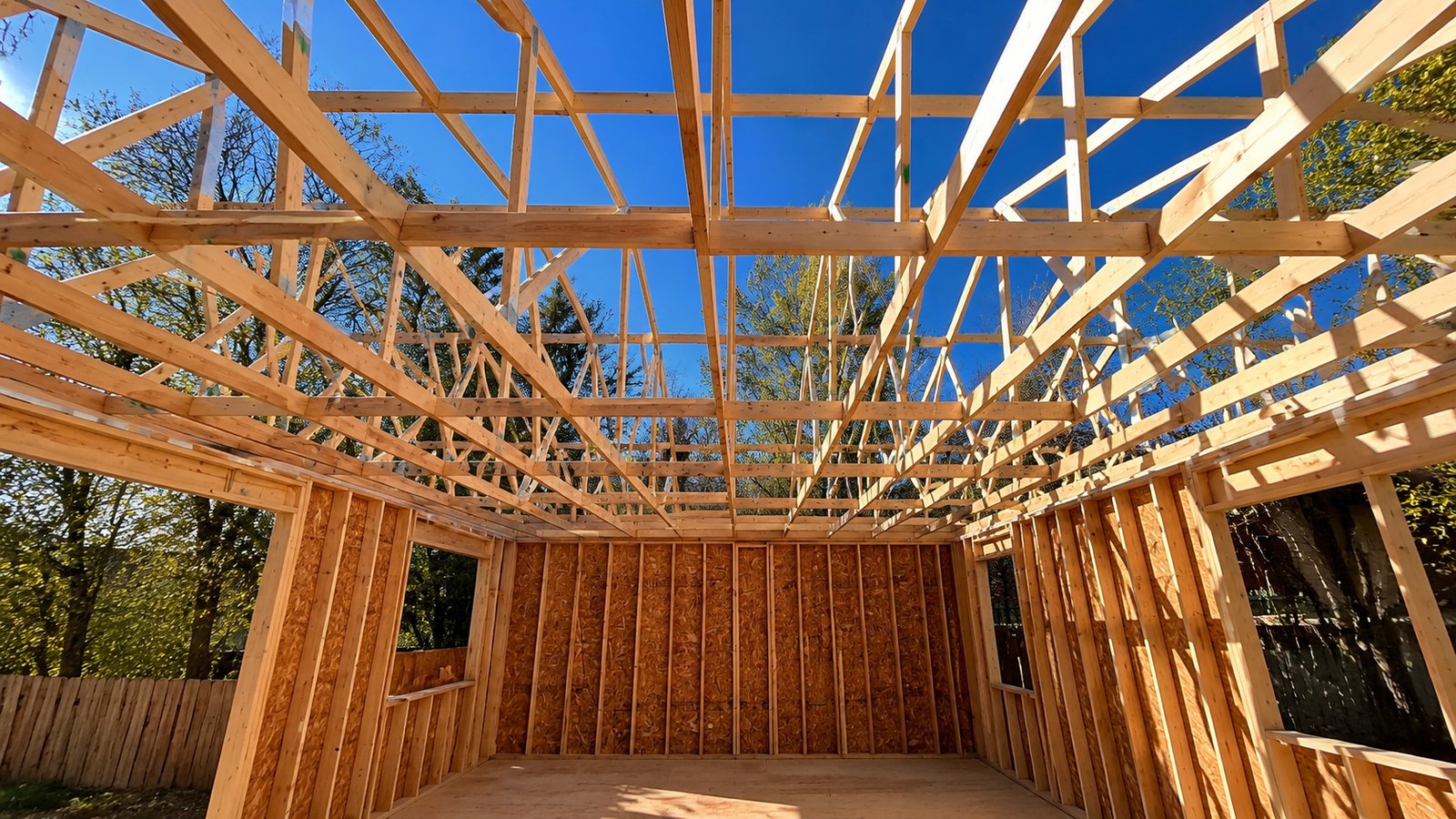
If you own a detached house in Toronto, you've probably heard both versions of the story over the past two years. Version one: "Build a suite in the backyard, collect $3,000 a month, easy money." Version two: "It costs $400K, rents are falling, you'll never make it back."
Both have data behind them. Both tell only half the story. We went through the City of Toronto's building permit records, the Planning Division's official monitoring reports, and rental market data from TRREB, Rentals.ca, and CMHC to answer the question properly: in 2026, is a garden suite (or laneway suite) still worth building?
Our short answer: yes — but not in the way most people think. Here's the math.
A Market That Grew Roughly 5x in Three Years
Start with the hardest data available — building permits.
Annual completions of backyard homes in Toronto (laneway + garden suites combined) went from 46 units in 2022 to 102 in 2023, 175 in 2024, and 236 in 2025. That's roughly 5x growth in three years. More telling is the pipeline: as of January 2026, there were 986 active permits under construction or waiting to break ground.
| Year | Completions (laneway + garden) | YoY Growth |
|---|---|---|
| 2022 | 46 | +15% |
| 2023 | 102 | +122% |
| 2024 | 175 | +72% |
| 2025 | 236 | +35% |
Garden suites are growing fastest. Since legalization in February 2022, permit applications went from 58 that first year to 337 in 2024, with over 800 total applications by May 2025. Laneway suites have been legal since 2018, but they have a hard geographic ceiling — your property has to back onto a public lane, and only about 47,000 Toronto homes qualify. Garden suites don't need a lane. Every large-lot detached house in North York, Scarborough, and Etobicoke is in play. That's why garden suites are where the growth is.
Thousands of Toronto families have already voted with real money. So what math are they doing?
The Cold Water First: The Rent Myth Needs an Update
A lot of investment spreadsheets built two or three years ago no longer hold.
Toronto rents peaked in May 2024 and have now fallen for 18 consecutive months, down about 8.8% on average from the peak. TRREB's Q1 2026 data shows the average GTA one-bedroom condo renting at $2,246, down another 4.1% year over year — with over 24,000 condos listed for rent, tenants have never had more choice.
Newly built garden and laneway suites currently achieve roughly $2,500 – $3,000 for a one-bedroom and $3,000 – $3,500 for a larger two-bedroom. Those aren't bad numbers — higher than older condos in the same neighbourhoods, with no maintenance fees. But if your pro forma assumes rent growing 5% a year, delete that line now. For the foreseeable future, the honest assumption is flat rents.
The federal $80,000 Secondary Suite Loan (2% interest, 15-year term) that many homeowners were waiting for was officially cancelled in the 2025 federal budget. It will not be implemented. The financing path that replaced it is covered below.
If the story ended here, the answer would look like "no." But what actually determines whether this investment works was never the rent. It's three other things.
First: The Cost Side Is Where Everything Changed
Return is the ratio of rent to cost. Rents are flat — but costs are experiencing a historic loosening:
Approvals got dramatically faster. In July 2025, Toronto City Council passed new by-laws that, together with Ontario's O.Reg 462/24, removed the angular plane requirement and the FSI cap. Most garden suites can now be permitted as-of-right — no more 3–6 month Committee of Adjustment detour. Official data shows average garden suite review time dropped from 216 days in 2022 to 96 days in 2024.
Design fees can largely disappear. The City's free "Made in Toronto" pre-approved plans, launched in 2025, save $10,000–$20,000 in design costs and shave roughly a month off approval.
Development charges are waived. Eligible garden and laneway suites pay no DCs — no small thing when charges routinely run into the tens of thousands.
Financing changed lanes, but it exists. The $80,000 loan is gone, but insured mortgage refinancing (effective January 2025) lets you refinance up to 90% of your property's post-renovation value, to a $2M cap, over a 30-year amortization. For most homeowners with equity, this route is actually more useful.
Second: What a 9% Cap Rate Means in Today's Toronto
Let's run a conservative example. A roughly 1,000 sq ft garden suite costs about $350,000 all-in (design, permits, servicing included). At $3,000/month gross rent and roughly $2,700 net of carrying costs, that's a cap rate of about 9%.
For comparison, a full multiplex rental property in Toronto trades at roughly a 5% cap rate. In other words, adding a unit in your own backyard is one of the highest-yielding residential investments an ordinary homeowner can access — because you don't have to buy the land twice.
Payback? Roughly 9.5–11 years gross. That sounds long, until you factor in one crucial detail: rental units first occupied after November 2018 are exempt from Ontario rent control. When the market turns, you can reprice to market instead of being locked into the ~2.5% annual guideline. In a falling market that option looks worthless. In the next up-cycle, it's exactly what condo landlords don't have.
Third: Rent Is Only Half the Return — the Other Half Is the Property Itself
The most overlooked value of a garden suite is what it does to your main property.
An ordinary detached house with a legal income unit is no longer just "a house" on the market — it's a cash-flowing asset. Industry figures (from builders, so apply a discount) suggest a garden suite adds roughly 80–90% of its construction cost to appraised value, and homes with suites sell noticeably faster. Even discounting those claims, the direction is clear: total return = rental cash flow + property appreciation + the rent-control exemption option. Anyone modelling only the first term is systematically underpricing the investment.
Then there's the return that never shows up in a spreadsheet: aging parents nearby, adult kids in transition, a real home office. Upsizing in Toronto costs a million dollars or more; a garden suite solves the same space problem for a third of that. A meaningful share of the families building suites never intended to rent them at all.
Who Shouldn't Build One?
All that said, honesty requires drawing the boundary. Think twice if:
You're a short-horizon investor counting on pure cash flow. The City's own monitoring report is blunt: given appraisal and underwriting uncertainty, garden suites "rarely generate significant cash flow unless folded into a larger multi-unit project." This is a long-term asset allocation, not a money printer.
Your lot has a hard constraint. Fire access is the most common deal-breaker — an unsprinklered garden suite needs a 1.0m-wide unobstructed path from the street to the entrance, max 45m travel distance. Protected trees (30cm+ diameter) can't be removed if healthy. These must be screened before you spend money on drawings, not after.
Your household cash flow is already tight. Median time from permit to completion is about a year — a year of spending with no rent coming in. Financing needs to be locked down first.
Our Verdict
So — is a garden suite worth the investment? If you're treating it as a high-rent arbitrage play, 2026 is not your year. If you're treating it as a policy-window opportunity to create a rent-control-exempt, long-term asset on land you already own at the lowest all-in cost in years — conditions are the best they've been in three years: fastest approvals on record, free plans, waived development charges, and a clear financing route.
Toronto's official target is 285,000 new homes by 2031; actual 2024 starts were around 21,000. The supply gap is structural, and backyard housing is explicitly part of the City's plan to close it. One or two years of rent softness won't reverse that.
The moment that decides whether a garden suite project succeeds isn't completion day — it's before you break ground. Can your lot go as-of-right? Any fire-access or tree issues? Do the pre-approved plans fit? Which financing route? A free feasibility screen answers most of those questions.
Sources: City of Toronto Garden Suites Monitoring Program Final Report (June 2025); City of Toronto Open Data building permit records; TRREB Q1 2026 Rental Market Report; Rentals.ca/Urbanation monthly rent reports; CMHC 2026 Mid-Year Rental Market Update. Return figures are indicative estimates, not investment, tax, or legal advice. Actual results vary by lot, design, and market conditions.