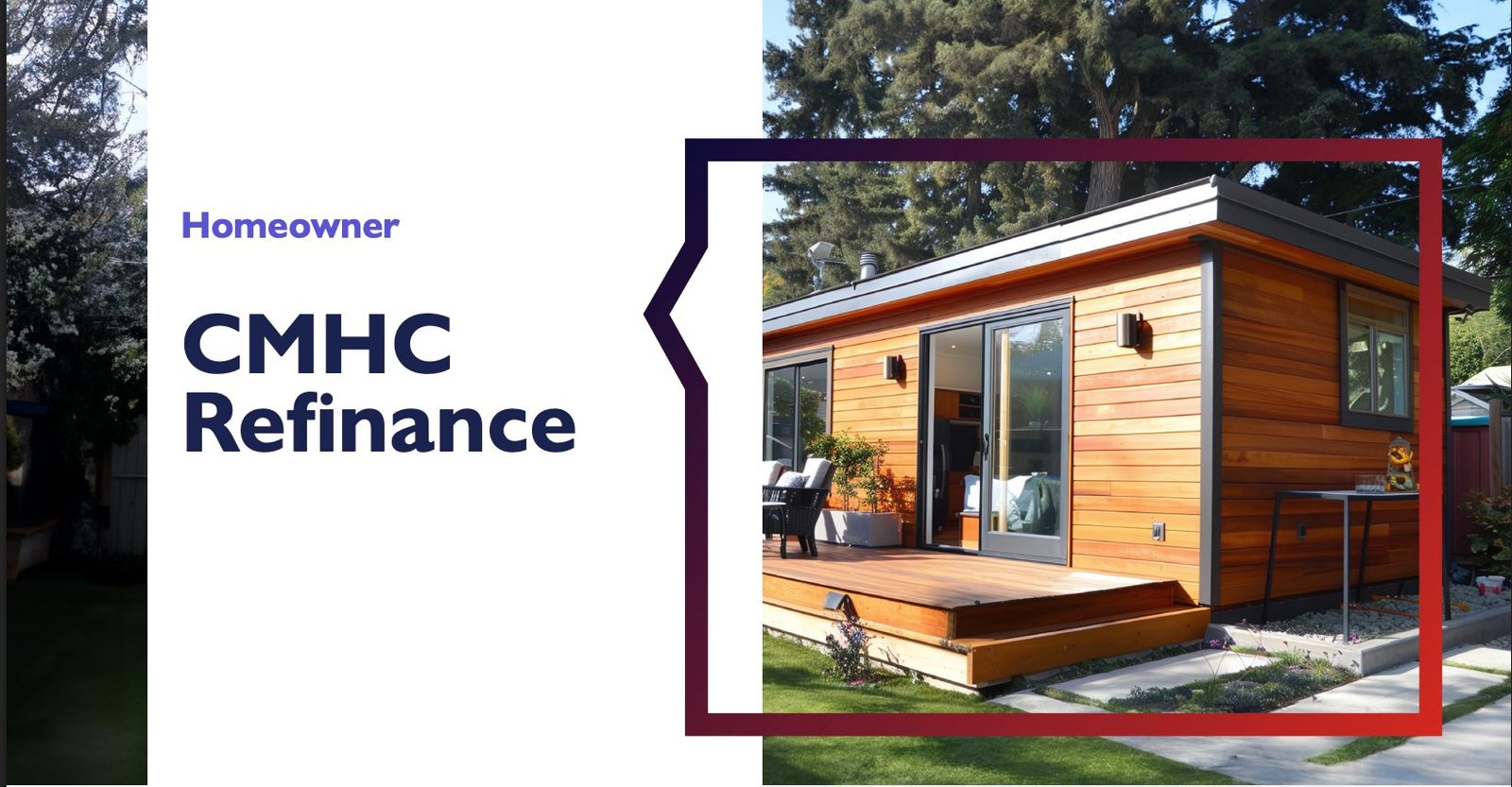
Toronto Garden Suite Rebates, Loans and Financing Programs in 2026
After CSSLP and the Toronto $50K Program Were Cancelled — What's Actually Still Available
Last updated: April 2026
The short answer for 2026: there is no longer a dedicated government grant or forgivable loan for a Toronto garden suite. The three programs most articles still quote — the $80,000 Canada Secondary Suite Loan Program, Toronto's $50,000 Affordable Laneway Suites Program, and BC's $40,000 incentive — have all been cancelled or discontinued.
What Toronto homeowners can still use in 2026, subject to eligibility:
- CMHC Insured Refinance for Secondary Suites — refinance up to 90% of your post-construction property value, amortization up to 30 years. This is the main funding route for most projects.
- City of Toronto Development Charges deferral — defer DCs rather than pay them up front.
- Free pre-approved garden and laneway suite plans from the City of Toronto, which can reduce design cost and permit review time.
- Professional Engineer's Seal program — a faster permit path on qualifying designs.
- GST/HST New Residential Rental Property Rebate — roughly $25,000–$30,000 on qualifying long-term rental units. Separate from the proposed HST relief of up to $130,000 for owner-built homes, which has its own eligibility rules and timing window.
- Capital Cost Allowance — depreciation against rental income, once the suite is tenanted.
Programs, rates and eligibility change. Amounts above are maximums for qualifying applicants, not guaranteed outcomes — confirm current terms with your lender, the City, and a qualified tax professional. Full detail on each program is below.
If you've spent any time researching how to finance a garden suite, laneway suite, or basement secondary suite in Toronto, you've probably run into the same three numbers over and over: $80,000 federal loan at 2% interest. $50,000 forgivable loan from the City of Toronto. $40,000 forgivable loan from BC Housing.
Here's the uncomfortable truth: all three of those programs are dead. None of them are accepting applications in 2026. Two of them never accepted a single application before being cancelled.
The internet hasn't caught up. Most blog posts you'll find ranking on Google were written in 2024, when these programs were either active or about to launch. Builders, real estate agents, and even some mortgage advisors are still quoting them in ROI projections. If you're planning a garden suite project based on that math, your numbers are wrong — and the gap between what was promised and what's actually available can be $80,000 to $130,000.
This guide is the honest, current picture as of April 2026. We'll cover what was cancelled, why, what's actually still on the table, and how to realistically finance an ADU project in Toronto today. Written by a Toronto-based design-build firm that lives this every day.
What's Been Cancelled (And Why It Still Shows Up Online)
Before we get to what works, let's clear out the noise. These are the three programs that dominate Google search results and are no longer real:
1. Canada Secondary Suite Loan Program (CSSLP) — CANCELLED
What was promised: Up to $80,000 in federal loans at 2% interest over 15 years to homeowners building a secondary suite — basement apartment, garden suite, laneway suite, or garage conversion.
What happened: The program was first announced in 2024 and expanded in the December 2024 Fall Economic Statement, with a target launch of early 2025. The launch never happened. Budget 2025 formally cancelled it. The official reason cited was overlap with the new CMHC Insured Refinance program (more on that below). Politically, the program was a creation of the previous government's housing platform, and the incoming priorities were different.
Why it still shows up online: Hundreds of builders, real estate blogs, and mortgage broker websites published explainer articles in late 2024 and early 2025 expecting the launch. Most of them have never been updated. If you Google "Canada Secondary Suite Loan Program application," you'll find pages that look authoritative but are describing a program that doesn't exist.
If a contractor or realtor includes this $80,000 loan in their ROI math for your ADU project — politely walk away. They are either not paying attention to policy changes or hoping you won't.
2. Toronto Affordable Laneway Suites Program ($50,000 forgivable loan) — DISCONTINUED
What was promised: Up to $50,000 in forgivable loans for Toronto homeowners who built a laneway suite and rented it at affordable rates for at least 15 years.
What happened: The City of Toronto's official Housing page now states directly: "Due to insufficient provincial program funding, the Affordable Laneway Suites Program has been discontinued and is not expected to be reactivated." The program lost its provincial funding stream and the City has not replaced it with a substitute.
Why it still shows up online: This program ran from 2018 onwards and was widely covered in Toronto real estate media. Many builder websites still list it as a "key incentive" for laneway suite projects. Some still link to a city application portal that no longer accepts new applications.
3. BC Secondary Suite Incentive Program ($40,000 forgivable loan) — CANCELLED
What was promised: Up to $40,000 in forgivable loans to BC homeowners building a secondary suite to rent at below-market rates.
What happened: BC Housing stopped accepting applications after March 30, 2025. The province cited "uncertain financial times" and the federal government's planned CSSLP rollout — but as we now know, the federal replacement never launched either. So BC homeowners ended up with neither program.
Why it shows up online: This isn't directly relevant to Toronto, but BC homeowners searching for similar programs across Canada often land on outdated pages — and Toronto homeowners doing comparative research see the same misinformation.
What's Actually Still Available in 2026
Now the useful part. These tools are real, currently operational, and worth structuring your ADU financing around.
1. CMHC Insured Refinance for Secondary Suites — The Big One
Effective: January 15, 2025 onward Status: Active and operational
This is now the single most important federal lever for ADU financing in Canada, and most homeowners have never heard of it because the cancelled CSSLP got all the publicity.
The mechanics:
- You can refinance your existing mortgage to access up to 90% of your home's post-construction value (the value after your ADU is built).
- The home value cap is $2,000,000.
- You can amortize the new mortgage over up to 30 years.
- Because the loan is insured by CMHC, lenders treat the additional risk differently — interest rates are typically lower than uninsured construction loans or HELOCs.
Why this is bigger than it sounds:
Before this program, the standard cash-out refinance maxed at 80% loan-to-value on the current (pre-construction) value of your home. That left a gap for many GTA homeowners — especially those whose existing equity wasn't enough to cover a $250K–$400K ADU project.
The CMHC Insured Refinance closes that gap by underwriting against the post-construction value, which acknowledges that the ADU itself adds significant value to the property. For most Toronto homes, building an ADU adds $150,000 to $300,000 in market value, and this program lets you borrow against that future value today.
A concrete example:
A Toronto homeowner has a property currently appraised at $1,400,000 with $700,000 remaining on their mortgage. They want to build a 600 sq ft garden suite costing $300,000. Post-construction, the home is appraised at $1,700,000.
Standard refinance (80% of as-is): $1.4M × 80% = $1,120,000 maximum mortgage. Subtract existing $700K, available cash = $420,000. Just enough, but no buffer.
CMHC Insured Refinance (90% of post-construction): $1.7M × 90% = $1,530,000 maximum mortgage. Subtract existing $700K, available cash = $830,000. Covers the build with $530,000 of headroom for landscaping, furnishings, vacancy buffer, or another project.
For middle-income homeowners with moderate equity, this difference often determines whether the ADU project is feasible at all.
The fine print to know about:
- Some insured options require the homeowner or a close relative to occupy one of the units on the property. Pure investor-occupier scenarios may not qualify.
- The additional unit generally cannot be used as a short-term rental (Airbnb-style). The financing assumes long-term tenancy. If you're planning a short-term rental strategy, you need to disclose this upfront — it changes which financing path applies.
- The exact qualification rules vary slightly between CMHC, Sagen, and Canada Guaranty. You need a mortgage broker who has actually closed one of these refinances under the post-January 15, 2025 rules.
- Appraisal is more involved than a standard refi because the appraiser has to assess "as-built" value based on plans rather than physical inspection. Choose a builder who can supply complete, professional drawings — appraisers reject thin documentation.
2. Toronto Development Charges Deferral Program
Status: Active
The City of Toronto's Development Charges Deferral Program for Ancillary Secondary Dwelling Units allows eligible property owners to defer development charges on their garden or laneway suite for up to 20 years after the building permit is issued — or until the lot is severed (Plan of Subdivision, Plan of Condominium, or Consent to Sever), whichever comes first.
What this means in practice:
For most owner-occupiers who don't intend to sever and sell the ADU as a separate lot, the development charges effectively never come due during their ownership of the property. Toronto DCs on a typical garden suite would otherwise run $20,000–$40,000+ in cash payable at permit stage.
This isn't a grant or an exemption — it's a deferral with conditions — but it's a major upfront cash flow benefit at the most cash-constrained moment of an ADU project.
3. Toronto's Free Pre-Approved Garden and Laneway Suite Plans
Effective: Released by the City of Toronto in 2025 Status: Active
In July 2025, Mayor Olivia Chow announced that the City of Toronto would release free, pre-approved garden and laneway suite designs to homeowners. The designs are pre-vetted for Ontario Building Code compliance, which means homeowners using them can skip the costs of hiring an architect for original design work.
What this saves:
- Architectural design fees for an original ADU typically run $5,000–$15,000.
- Permit review timelines are shorter for pre-approved designs because Toronto Building staff don't need to review novel design choices against the OBC from scratch.
The trade-off:
You're locked into one of the City's standard designs. If your property has unusual constraints (irregular lot, mature tree protection, heritage considerations) or you have specific aesthetic or programmatic preferences, these stock plans may not fit. For straightforward rectangular backyards, they can save real money. ARVO has reviewed all of the City's pre-approved options and can advise which ones (if any) work for your specific property.
4. Reliance on Professional Engineer's Seal Program
Status: Expanded July 14, 2025 to include garden and laneway suites
This is a process improvement rather than a financial program, but it has real cost implications. Under this program, licensed professional engineers can sign off on ADU designs and certify OBC compliance directly, rather than waiting for a full City of Toronto plans review.
The City estimates this cuts roughly 28 days off typical permit approval timelines for ADU projects. For a project where carrying costs (mortgage interest on land, equipment, construction loan interest) run $5,000–$15,000 per month, four weeks of saved time is meaningful money.
ARVO works with P.Eng. partners who use this program for qualifying ADU projects. It's not always faster — for complex designs, full City review may still be necessary — but for straightforward applications it's a real time-saver.
5. Ontario Regulation 462/24 — Provincial Zoning Simplification
Effective: November 20, 2024 Status: In force
Ontario Regulation 462/24 made several zoning simplifications that directly reduce ADU project costs and risk:
- Eliminated the angular plane requirement for garden and laneway suites. The angular plane was a major design constraint that often forced sloped roofs and reduced second-floor square footage. Removing it lets builders use simpler rectangular volumes, which reduces both design fees and construction costs.
- Standardized minimum separation at 4 metres between an ARU and any other residential building on the same lot.
- Removed FSI limitations for garden and laneway suites in many cases, aligning the rules with broader multiplex regulations.
This isn't financing per se, but it reduces project costs by $10,000–$30,000 on many properties by allowing more efficient designs.
The City of Toronto has adopted parts of O.Reg 462/24 into its own zoning framework. For new projects starting after November 20, 2024, the new rules apply.
6. HST/GST New Residential Rental Property Rebate
Status: Active (federal)
If your ADU is built and used as a long-term rental property, you may qualify for the GST/HST New Residential Rental Property Rebate, which can return up to roughly $30,000 of HST paid on the construction.
Key qualification criteria:
- The unit must be self-contained with its own kitchen, bathroom, and entrance.
- It must be rented as a primary residence (long-term lease, generally one year or more).
- The first tenancy must be established within a specific window after construction completion.
- Application is made through the CRA after the unit is rented.
This rebate does not apply if you build the ADU for family use (parents, adult children) without charging fair market rent, or if you use it as a short-term rental (Airbnb).
For investor-track ADU projects, the HST rebate is often the difference between a project breaking even on tax-adjusted basis and showing a loss in year one. Plan for it from the design stage — the rebate process requires specific documentation that's hard to assemble retroactively.
7. Capital Cost Allowance (CCA) Depreciation
Status: Always available for rental ADUs
If you rent your ADU as long-term housing, you can depreciate the building portion (not the land) for tax purposes through CCA. This isn't financing in the traditional sense, but it shelters rental income from tax for many years.
The standard rate for residential buildings is 4% per year on a declining balance. For a $300,000 ADU, that's $12,000 of depreciation expense in year one, sheltering up to $12,000 of rental income from tax.
A common mistake: claiming CCA reduces the adjusted cost base of the property, which means more capital gains tax when you eventually sell. For long-term holders, CCA is straightforward; for short-term holders, the math is more nuanced. Talk to an accountant who's familiar with rental property structures.
How to Actually Finance an ADU in Toronto in 2026
With the dead programs cleared away, here's how a realistic ADU financing plan looks in 2026.
Step 1: Determine Your Equity Position
The single most important variable is how much equity you have in your existing home. For most ADU projects:
- Homes with 40%+ equity: CMHC Insured Refinance is usually the best path. You have enough headroom to cover the full project from refinanced mortgage proceeds, often without touching savings.
- Homes with 20–40% equity: CMHC Insured Refinance is still likely the best path, but the math is tighter. You may need to combine it with a HELOC or supplemental savings.
- Homes with under 20% equity: ADU financing becomes significantly harder. You may need to wait, build equity, or find a creative structure (e.g., a private investor partnership). The post-construction LTV calculation can still work, but lenders apply more conservative valuations.
A free home equity assessment from a mortgage broker who's familiar with the CMHC program is your starting point. Don't pay for this — any broker worth working with will provide it free in hopes of earning your business.
Step 2: Choose Your Financing Structure
The three main paths most ARVO clients use:
Path A: CMHC Insured Refinance only
- Refinance your existing mortgage into a new larger one that funds the entire ADU build.
- One monthly payment, typically lowest interest rate.
- Best for: clients who plan to hold the property long-term and don't mind restarting the mortgage clock.
Path B: CMHC Insured Refinance + HELOC
- Refinance to your existing mortgage's original balance (or modestly higher), then use a HELOC for ADU construction draws.
- Pay interest only on what you use during construction.
- Convert HELOC to amortized loan at completion, or roll into next mortgage renewal.
- Best for: clients who want flexibility during construction and don't want to fully reset their mortgage.
Path C: HELOC + Refinance at Completion
- Use HELOC to fund construction.
- Refinance once the ADU is complete and the post-construction appraisal is in.
- Refinance pays off the HELOC and provides long-term financing at lower rates.
- Best for: clients with significant equity already, low existing mortgage rates they want to preserve, and tolerance for two-stage financing.
There's no universally best path. Choice depends on your existing mortgage rate, your renewal date, your tolerance for interest-only HELOC payments during construction, and whether you're optimizing for rate or flexibility.
Step 3: Layer in the Stack
The full financing stack for a typical Toronto garden suite project, post-cancellations:
| Layer | Approximate Value | Type |
|---|---|---|
| CMHC Insured Refinance proceeds | $250,000–$500,000+ | Loan (you repay) |
| HELOC for construction draws | $50,000–$200,000 | Loan (you repay) |
| Toronto DC deferral | $20,000–$40,000 | Deferred fee |
| Toronto pre-approved plans (if used) | $5,000–$15,000 saved | Cost reduction |
| Ontario Reg 462/24 design simplification | $10,000–$30,000 saved | Cost reduction |
| HST rental property rebate (if rented) | Up to ~$30,000 | Rebate (post-completion) |
| Annual CCA depreciation (if rented) | $10,000–$15,000/year | Tax shelter |
Notice what's not in the stack: any forgivable grant or non-repayable subsidy. In 2026, every dollar that comes into your ADU project is either money you owe back to a lender, money you're deferring to pay later, or money you save by being smart about design and process.
This is a more sober picture than what was being marketed in 2024. It's also the truth.
Step 4: A Realistic Cash Flow Example
Let's run a complete project for a Markham-area homeowner building a 600 sq ft garden suite as a long-term rental:
Property assumptions: - Current home value: $1,500,000 - Current mortgage balance: $750,000 - Current equity: $750,000 (50%)
Project assumptions: - ADU construction cost: $300,000 (turnkey, ARVO range for 600 sq ft) - Soft costs (design, permits, inspections, surveys): $35,000 - Total project cost: $335,000 - Post-construction home value: $1,800,000
Financing plan: - New CMHC Insured Refinance: $1,800,000 × 90% = $1,620,000 maximum - Pay off existing $750,000 mortgage - Available for project: $870,000 - Project draws used: $335,000 - Remaining liquidity: $535,000 (kept as buffer / available for next project)
Monthly numbers post-completion: - New mortgage payment (assume ~5.0% rate, 30-yr amortization on $1,085,000 = old mortgage + project): roughly $5,800/month - Old mortgage payment (assume similar rate, 25-year amortization remaining on $750K): roughly $4,400/month - Net additional payment from ADU: ~$1,400/month
Rental income post-completion: - 600 sq ft 1-bedroom garden suite in Markham, market rent 2026: $2,100–$2,400/month - Operating expenses (insurance, utilities, repairs allowance): ~$300/month - Net rental income: ~$1,800–$2,100/month
Net cash flow: - ADU rental income (~$1,900) − Additional mortgage payment ($1,400) = +$500/month positive cash flow, before HST rebate and CCA tax savings.
One-time cash impact at year 1: - HST New Residential Rental Property Rebate: ~$25,000–$30,000 cash refund (claimed after first tenancy established)
This is a realistic 2026 picture. Cash flow positive from month one, plus a sizeable HST rebate in year one, plus annual CCA depreciation reducing taxable rental income for the next 20+ years. It's a less dramatic story than "$80,000 free federal money + $50,000 forgivable Toronto loan + HST rebate" — but it's a story that's actually true.
Common ADU Financing Options Explained
Now that you understand the strategic financing stack, here's a deeper look at the individual products you might encounter.
Home Equity Line of Credit (HELOC)
A HELOC is a revolving credit line secured against your home's equity. Most major Canadian banks offer them, typically up to ~65% of your home's appraised value (with the combined HELOC + first mortgage capped at 80% in most cases for uninsured products).
Pros: - Interest-only payments during draw period - Borrow only what you need, when you need it - Flexible structure for ADU construction draws
Cons: - Variable interest rate (currently higher than insured mortgage rates) - Requires existing equity - Lender can reduce your limit
Best use case: Bridge financing during ADU construction, paid off through completion-stage refinance.
Common product names by bank: - BMO Homeowner ReadiLine® - RBC Royal Credit Line / Homeline Plan - TD Home Equity FlexLine - Scotiabank STEP (Scotia Total Equity Plan) - CIBC Home Power Plan / Home Power Mortgage
Mortgage Refinance (Conventional, Uninsured)
Refinancing means replacing your existing mortgage with a new larger one and taking the difference in cash. For uninsured products, the maximum loan-to-value is 80% of the current appraised value.
Pros: - Lower interest rate than HELOC - Fixed monthly payment - Single loan to manage
Cons: - Limited to 80% of as-is value (vs. 90% post-construction with CMHC insured) - May trigger early-payout penalties on existing mortgage - Resets amortization period
Best use case: Homeowners with significant equity who want a single fixed payment and don't qualify for or need the CMHC insured product.
Construction Loan (Specialized ADU Product)
Some lenders — RBC notably — offer specialized construction loans for ADU and multi-unit development projects. These structure financing as progress draws against project milestones rather than a single lump sum.
Pros: - Designed for the cash flow rhythm of construction - Funds released as work is completed - Ensures lender oversight at each phase
Cons: - Higher interest rates than standard mortgages - More complex documentation requirements - Inspection fees at each draw - Provincial holdback requirements (Ontario Construction Lien Act: 10% holdback for 45+ days post-completion)
Best use case: Larger ADU projects ($350,000+), laneway homes with significant complexity, or homeowners without enough equity for CMHC Insured Refinance.
Home Equity Loan (Second Mortgage)
A home equity loan is a fixed-amount, fixed-payment loan secured against your home's equity, taken in addition to your existing mortgage. Unlike a HELOC, you receive the full amount upfront and pay it back on a fixed schedule.
Pros: - Fixed rate and payment - No risk of credit limit reduction - Doesn't affect existing first mortgage
Cons: - Higher rates than first-mortgage refinance - Less flexible than HELOC - All interest accrues from day one
Best use case: Homeowners with low first-mortgage rates they don't want to disturb, who need a one-time lump sum for the ADU build.
Personal Loan or Unsecured Line of Credit
Generally not recommended for ADU financing. Interest rates on unsecured products run 8–15%+ in 2026, and limits are typically too low to fund a complete project. Use only as a small gap-filler if absolutely necessary.
How to Choose a Mortgage Broker for an ADU Project
Most general-purpose mortgage brokers in Toronto have not closed a CMHC Insured Refinance for a secondary suite under the post-January 2025 rules. The product is new enough that real-world experience is rare. You don't want to be your broker's first ADU client — you want to be their fifteenth.
Vetting questions to ask any broker before engaging them:
- "Have you closed any CMHC Insured Refinance for a secondary suite under the post-January 15, 2025 rules?" If yes, ask for an anonymized example. If no, look elsewhere.
- "How does post-construction LTV calculation work, and how do you coordinate with the appraiser?" The answer should reference "as-built" appraisals based on plans and specifications.
- "For an ADU project on an owner-occupied property in Toronto, what's the realistic financing stack a typical client should plan for in 2026?" The right answer mentions CMHC Insured Refinance as primary, HELOC as supplement, and HST rebate post-completion. Wrong answers reference CSSLP, the $50K Toronto program, or any cancelled product.
- "Are there any restrictions on short-term rental use of the ADU under the financing you'd recommend?" The right answer acknowledges that insured products typically restrict Airbnb-style use.
- "How do you handle progress draws and Construction Lien Act holdbacks during construction?" The answer should reference 10% holdback for 45 days minimum under Ontario law.
ARVO works with a vetted network of mortgage brokers who have closed multiple secondary suite refinances under the current rules. We don't take referral fees — our incentive is that the financing actually closes so the project moves forward. If you'd like an introduction, we're happy to connect you.
Frequently Asked Questions (2026)
Is the Canada Secondary Suite Loan Program ($80,000 at 2%) available in 2026?
No. The program was announced in the 2024 Fall Economic Statement, scheduled to launch in early 2025, and formally cancelled in Budget 2025 before accepting any applications. It is not active and is not expected to relaunch in its original form.
Is Toronto's $50,000 Affordable Laneway Suites Program still available?
No. The City of Toronto has officially discontinued the program, citing insufficient provincial funding. The City does not expect to reactivate it.
What's the best way to finance a garden suite in Toronto in 2026?
For most Toronto homeowners, the CMHC Insured Refinance for Secondary Suites (effective January 15, 2025) is the strongest financing tool. It allows refinancing up to 90% of post-construction home value, up to a $2 million home value cap, amortized over 30 years. Combined with the Toronto Development Charges Deferral and (if applicable) the HST New Residential Rental Property Rebate, this is the standard 2026 financing stack.
Can I still get any non-repayable money toward a Toronto ADU project?
The HST New Residential Rental Property Rebate (up to ~$30,000) is the only meaningful non-repayable benefit for owner-built ADUs in Toronto in 2026. It's claimed after the unit is rented as a long-term residence. The Toronto DC deferral is a deferral, not an exemption — you may eventually pay it if you sever the lot.
Do I need a construction loan to build an ADU, or is a refinance enough?
For most projects under $400,000, CMHC Insured Refinance combined with a HELOC handles construction draws without needing a specialized construction loan. Specialized construction loans (e.g., RBC's Multi-Unit Construction Mortgage Program) become useful for larger or more complex projects, particularly two-storey laneway homes or projects requiring phased financing.
How much does a garden suite cost in Toronto in 2026?
Typical ranges for a turnkey garden suite project in Toronto and the GTA: - Small (300–450 sq ft studio/bachelor): $200,000–$275,000 - Mid-size (500–650 sq ft 1-bedroom): $275,000–$350,000 - Large (700+ sq ft 1- or 2-bedroom): $350,000–$450,000+
These ranges include construction, permits, design, utility connections, and standard finishes. Site conditions (tree protection, grading, soil, access) can add $20,000–$60,000.
Will the ADU pay for itself?
For a typical mid-size garden suite financed through CMHC Insured Refinance and rented at market rates, monthly cash flow is usually positive after the build is complete — typically $300–$700/month positive. The HST rebate provides a one-time cash injection in year one. CCA depreciation shelters rental income from tax for 20+ years. Capital appreciation on the property is generally substantial. Whether the project "pays for itself" depends on your time horizon — most ARVO projects break even on a tax-adjusted basis within 8–12 years.
Can I use the ADU as an Airbnb?
Generally no, if you're using insured financing. The CMHC Insured Refinance for Secondary Suites typically restricts the additional unit from being used as a short-term rental. The program is designed to add long-term rental supply, not vacation rentals. If short-term rental is your goal, you'll need uninsured financing (conventional refi, HELOC, construction loan) and you'll lose the 90% LTV advantage. Be honest with your mortgage broker about your intended use — getting caught using an insured-financed unit for short-term rentals can have serious consequences.
Do I need to live in the main house to qualify for ADU financing?
For most insured financing options, yes — owner-occupancy of one of the units (main house or ADU) is required. Some lenders allow a close family member to occupy instead. Pure investor scenarios (you don't live there, family doesn't live there) typically require uninsured financing.
How long does the financing process take?
For a CMHC Insured Refinance, expect 6–10 weeks from application to funding, including the as-built appraisal which is more involved than a standard appraisal. Plan to have your mortgage approval in place before signing a construction contract. ARVO can coordinate timing so financing closes before construction starts.
What This Means for Your ADU Decision
The 2026 ADU financing landscape is leaner than what was promised in 2024, but it's not as bleak as the cancelled headlines suggest. The CMHC Insured Refinance for Secondary Suites is genuinely a powerful tool — for many Toronto homeowners, it's actually more useful than the cancelled $80,000 federal loan would have been, because it's based on post-construction value rather than a flat cap.
The key shifts for anyone planning an ADU project in 2026:
- Stop budgeting around grants that don't exist. Every "free money" component of pre-2025 ADU marketing is gone except the HST rebate.
- Build your financing plan around the CMHC Insured Refinance. This is the foundation. Everything else stacks on top.
- Choose a mortgage broker who has actually closed one of these refinances. This is a new product and most brokers aren't fluent in it yet.
- Don't let outdated online content distort your ROI calculations. If you're seeing a project ROI calculator that still includes CSSLP or the Toronto $50K program, the math is wrong.
- The numbers still work. A well-designed garden suite, financed through current tools and rented at market rates, is still cash-flow positive from month one for most GTA homeowners.
ARVO has built our practice around honest, current financial guidance for ADU clients. We don't promise grants that don't exist. We don't structure ROI calculators around dead programs. We help homeowners understand what's actually available in the current market and design projects that work financially under those real constraints.
If you'd like a no-cost feasibility assessment for an ADU on your property — including a current 2026 financing analysis specific to your equity position and project goals — get in touch with us at hello@arvosuites.com or visit arvosuites.com.
This guide is current as of April 2026 and reflects federal, provincial, and municipal program status as of that date. ADU financing programs change frequently, often without widespread media coverage. ARVO updates this guide quarterly. For the most current advice on your specific situation, contact us directly.
ARVO Backyard Homes · 雅筑 is a Toronto-based design-build firm specializing in garden suites, laneway suites, and basement secondary suites across the Greater Toronto Area. We serve clients in English and Mandarin and operate as a turnkey general contractor across permitting, design, construction, and post-completion support.
Related ARVO Resources:
- How much a garden suite costs in Toronto and the GTA in 2026 — the cost side of the same equation.
- HST relief of up to $130,000 for owner-built homes — how it may apply to a garden suite, and the timing window.
- Garden suites in Toronto — zoning, permit path and our design-build service.
- Garden suites in Markham and garden suites in Mississauga — local rules and incentives.
- Prefab vs site-built garden suites — which approach suits your property.
- ARVO floor plans — 17 permit-ready designs with sizes and bedroom counts.
This article is for informational purposes only and does not constitute tax, legal, or financial advice. Program details are subject to change. Always consult qualified professionals before making construction or financing decisions.