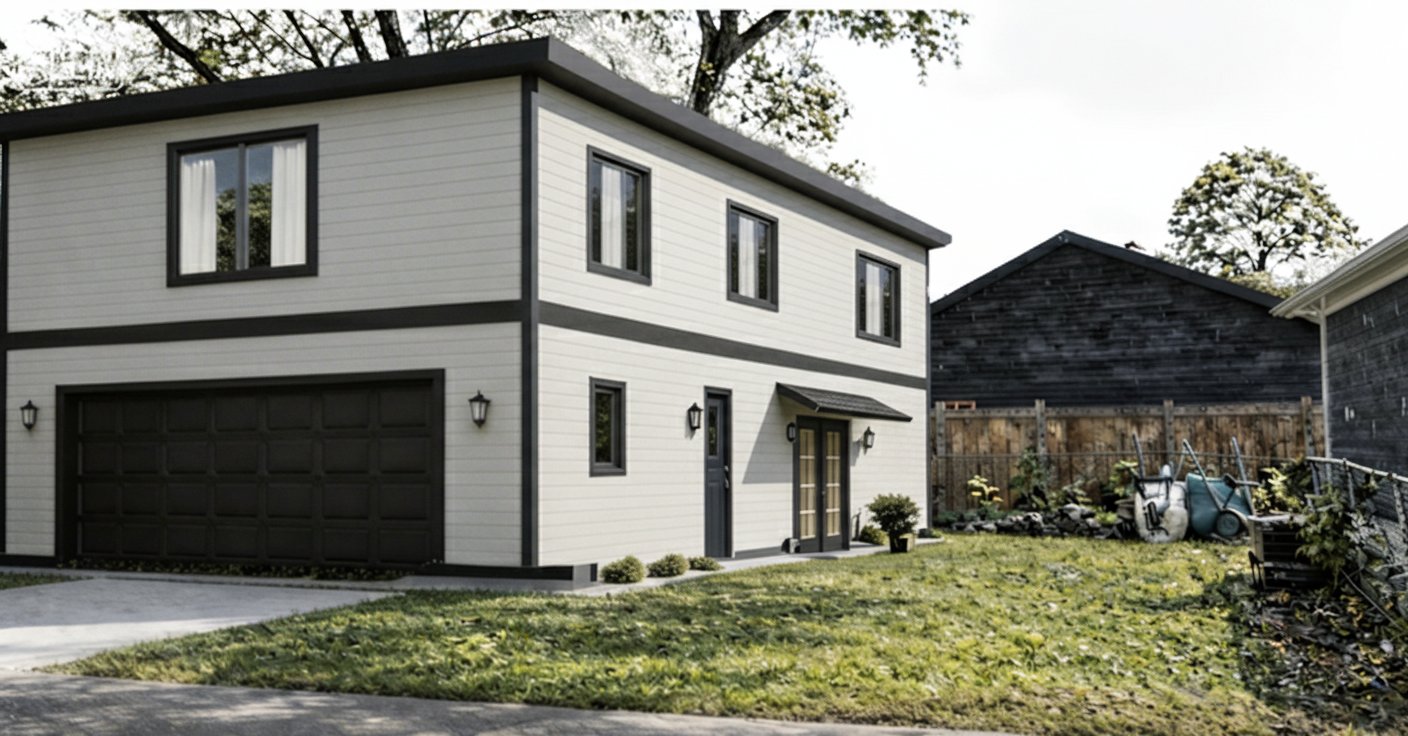
The federal and Ontario governments have opened a twelve-month window — from April 1, 2026 to March 31, 2027 — that delivers the largest HST relief on new residential construction in Canadian history. For GTA homeowners, this isn''t a routine tax break. It''s a structural opportunity to reduce a garden suite''s effective build cost by $60,000 to $120,000 once you stack HST recovery with Bill 23 development charge exemptions.
But the headline number of "$130,000 in HST savings" only tells part of the story. When you''re the one building the suite in your own backyard — rather than buying a finished home from a developer — the mechanism works differently, and the math looks different too. Here''s what actually applies.
What the 2026 HST Rebate Actually Is
On March 25, 2026, Ontario''s 2026 Budget announced a temporary, one-year measure — in partnership with the federal government — to fully eliminate the 13% HST on eligible newly built homes. The program expands what was previously a first-time-buyer benefit to all eligible buyers, including move-up purchasers, downsizers, and investors acquiring residential rental properties.
| New Home Value | Maximum HST Relief |
|---|---|
| Up to $1,000,000 | Up to $130,000 (full 13%) |
| $1M – $1.5M | Flat $130,000 |
| $1.5M – $1.85M | Tapers to $24,000 |
| Above $1.85M | ~$24,000 (existing rules) |
As of early April 2026, the federal amendments to the Excise Tax Act required to bring this into full legal force had not yet received Royal Assent. The policy is announced and broadly agreed upon between governments, but confirm the latest legislative status before signing construction contracts.
Does It Apply to a Backyard Build?
Yes — but through a different mechanism than purchasing a finished home from a builder.
Ontario''s official budget backgrounder explicitly states: "In addition to purchasing a new home from a builder, you may be eligible if you build, or hire someone else to build, a home on land you own or lease." For owner-built homes used as long-term residential rental properties, construction must begin between April 1, 2026 and March 31, 2027, and the home must be substantially completed by December 31, 2029.
A garden suite, as a newly built detached structure, is accessed through the New Residential Rental Property Rebate (NRRPR) framework — not the standard New Housing Rebate (NHR) used when you buy a finished home from a developer.
| Scenario | Rebate Path |
|---|---|
| Buy new home from builder (self-occupied) | NHR — credited at closing |
| Buy new home from builder (rental) | NRRPR — claimed after tenant moves in |
| Owner builds garden suite (rental) | NRRPR — claimed from HST invoices |
| Owner builds for personal use | NHR (owner-built) — on construction cost |
The key distinction: on a garden suite you don''t pay HST on a sale price — because there is no sale. You pay HST on contractor invoices as construction proceeds, and then recover it by filing with the CRA once the suite is built and a long-term tenant has moved in.
How Much You Can Actually Save
Because garden suites have no sale price, the CRA calculates the rebate based on HST actually paid to contractors on construction invoices. The rebate scales with build cost — not with the notional $1.5M price ceiling in the headlines.
Under the Old Rules
The prior GST/HST New Housing Rebate structure had two tracks, and many homeowners never realized how modest the real ceiling was:
| Use of Suite | Real-World Cap |
|---|---|
| Owner-occupied (NHR) | Max ~$16,200 |
| Long-term rental (NRRPR) | Max combined ~$24,000 |
The federal portion phased out above a $350,000 base price, and the Ontario portion was capped at $24,000 but rarely reached together. In practice, a $400,000 garden suite built for rental use recovered approximately $22,000 – $24,000 — well short of the full HST paid.
Under the New 2026 Rules
| Build Cost | HST Paid (13%) | Old Recovery (Rental) | 2026 Recovery |
|---|---|---|---|
| $250,000 | $28,761 | ~$20,000 | ~$28,700 |
| $350,000 | $40,265 | ~$24,000 | ~$40,200 |
| $400,000 | $46,018 | ~$24,000 | ~$46,000 |
| $500,000 | $57,522 | ~$24,000 | ~$57,500 |
The bottom line: on a typical $400,000 garden suite, recovery moves from ~$24,000 to ~$46,000 — roughly double the savings for rental-use builds, and nearly three times the savings compared to old owner-occupied rules. And it''s available for one year only.
Why These Twelve Months Matter
No single incentive makes a garden suite an obvious investment. What makes 2026–2027 exceptional is that multiple forces align simultaneously — and most of them are temporary.
Stack the Two Biggest Savings
On a $400,000 build, the combined policy-driven savings look like this:
| HST rebate (new 2026 rules) | ~$46,000 |
| Development charge exemption (Bill 23) | ~$25,000 |
| Total policy-driven savings | ~$71,000 |
The effective net cost of a $400,000 garden suite drops to approximately $329,000 — a 17% reduction without any change to build quality or scope.
Other Forces Working in Your Favour
Interest rates. The Bank of Canada''s policy rate has declined from its 5% peak to approximately 2.75%, and consensus expects it to stay low through 2026–2027. Combined with the 2025 rule change allowing 90% LTV refinancing, homeowners with equity can fund construction without liquidating savings.
Stable construction costs. The pandemic-era surge in materials and labour has largely normalized. GTA contractor quotes in 2025–2026 reflect a more competitive market — costs you can lock in now before demand within the policy window drives them back up.
Rental demand. Even with short-term immigration cooling, the structural housing supply deficit in the GTA cannot be resolved in a single cycle. Garden suites, as self-contained detached units, continue to command rental premiums over basement or shared-access units.
As-of-right zoning. Bill 23 established "as-of-right" permission for ADUs on qualifying residential lots — no rezoning, no Committee of Adjustment applications.
The Same Suite, Two Policy Environments
| Cost Item | Pre-2024 Rules | 2026 New Rules |
|---|---|---|
| Base construction cost | $400,000 | $400,000 |
| Development charge | ~$25,000 | $0 (exempted) |
| Net HST cost after rebate | ~$22,000–$29,800 | ~$0–$5,000 |
| Effective total cost | ~$447,000–$454,000 | ~$329,000–$335,000 |
The same garden suite, started in the 2026 window, costs roughly $115,000–$120,000 less than it would have two years ago — before accounting for any improvement in financing costs.
How to Claim the Rebate — Step by Step
The HST rebate on an owner-built rental garden suite is not automatic. It requires deliberate documentation and correct filing.
1. Confirm your construction start date
The build must break ground between April 1, 2026 and March 31, 2027. The "start" is the commencement of physical construction — not design work or permit submission. Keep dated site photos, contractor schedules, and permit issuance records.
2. Collect every contractor invoice showing HST
Request HST-itemized invoices from every trade: foundation, framing, electrical, plumbing, HVAC, finishing. These invoices are the evidentiary basis for your claim. Keep organized records for at least six years.
3. Substantially complete by December 31, 2029
The CRA defines "substantially completed" as approximately 90% complete — the point at which the unit is reasonably habitable. Minor finishing items do not disqualify the project.
4. Place a qualifying long-term tenant
The NRRPR requires the suite to be used as long-term residential rental, with the tenant occupying the unit as their primary place of residence. Short-term rentals (Airbnb), vacation use, or personal occupancy do not qualify.
5. File CRA Form GST524 after first tenancy begins
Submit the NRRPR application with HST invoices, building permit, and signed tenancy agreement. Typical CRA processing time is 3–6 months.
6. Consult a tax professional before signing any contract
Each project''s eligibility depends on specific circumstances. Engage an accountant or tax lawyer with HST housing rebate experience before committing to a construction contract.
What About the Resale Market?
A question we hear often: if new homes suddenly become much cheaper, does that crash resale values? The honest answer is layered.
Direct impact: none. HST does not apply to resale residential properties in Canada. The new exemption doesn''t apply to resale homes as a benefit or a cost.
Indirect impact: real but limited. The exemption narrows the price gap between new construction and comparable resale. Previously, buyers absorbed a 13% premium when choosing a new build. With that gap largely eliminated for the policy window, resale sellers in competitive price bands — particularly older homes requiring renovation in the $600,000–$900,000 range — will feel added pricing pressure from well-priced new builds.
Long-term owners are largely insulated. One year of policy-driven demand shift will not restructure land values. Toronto''s scarcity fundamentals took decades to form and a temporary incentive doesn''t change the underlying supply constraint.
Garden suite owners gain a competitive edge. Building a garden suite during the policy window combines the land value of an existing property with a newly built income unit that captures the NRRPR rebate — a hybrid asset neither a pure resale buyer nor a pure new-home buyer can replicate.
Frequently Asked Questions
Can I claim the rebate if I build the suite for my parents or an adult child to live in?
Only if they rent it from you as their primary residence under a bona fide tenancy agreement. Gifted or rent-free family use does not qualify under the NRRPR framework. Speak with a tax professional before the build starts.
What if I build now but don''t find a tenant until 2030?
The NRRPR claim is triggered when the first long-term tenant occupies the unit. The construction must be substantially completed by December 31, 2029, but the tenancy itself can begin shortly after. Delayed tenancy past that deadline creates significant risk — don''t leave it to chance.
Does this policy replace or stack with the existing HST New Housing Rebate?
For the one-year window, the enhanced relief replaces the standard capped rebate. You cannot double-claim. After March 31, 2027, the existing rebate structure (capped at ~$24,000) resumes unless extended.
What counts as "starting construction"?
The CRA looks for the commencement of physical construction — typically excavation or foundation work. Design contracts, permit submissions, or site surveys do not qualify as "construction start."
Can I use the rebate on a prefab or modular garden suite?
Yes, provided the unit is new, installed between the eligible dates, used for long-term rental, and the HST paid on the purchase and installation is properly documented.
Is the federal legislation definitely passing?
As of April 2026, the federal amendments to the Excise Tax Act had not yet received Royal Assent. The Ontario government stated the federal government had "approximately agreed" to cost-share. Treat the policy as "announced and being implemented" but confirm current status before signing contracts.
This article is for informational purposes only and does not constitute tax, legal, or financial advice. HST rebate eligibility depends on individual project circumstances and is subject to final passage of federal legislation. Always consult a qualified tax professional before making construction decisions.